


Home Lone Worker Protection in the public service and local authorities
In the public sector, many employees work in isolation. This means they are out of sight or earshot of others and, in the event of an accident, have no means to directly notify a colleague of their distress.
According to data from Assurance Maladie, the construction and public services sector—which encompasses a large proportion of public sector roles exposed to isolation—recorded 89,112 workplace accidents in 2021, including 126 deaths. These figures highlight the hazards and risks of certain tasks performed alone, whether by technical agents, maintenance staff, social workers, or local government employees.
Faced with these risks, lone worker protection in the public sector has become a major occupational health and safety priority for employers in local authorities.
Which public sector activities are at risk?
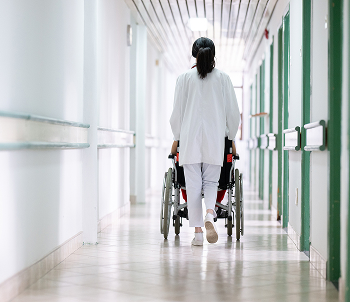
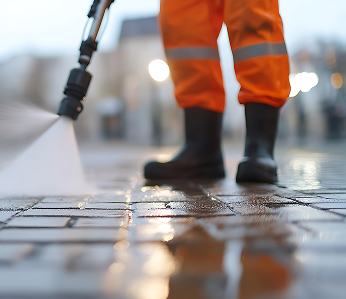
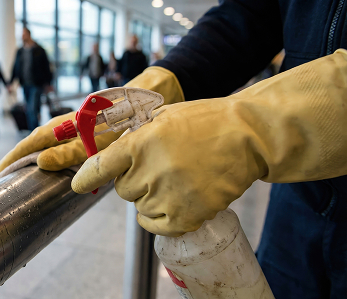
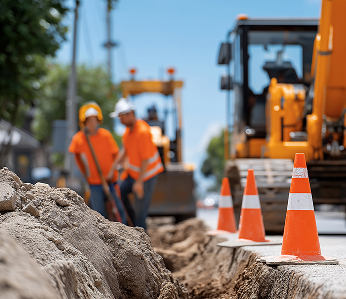
Lone workers in the public sector are exposed to a wide variety of risks, both physical and psychological. Depending on where their tasks take place, maintenance and service staff are potential victims of falls, electrocution, or even traffic accidents.
Social workers, local authority educators and home care assistants are more frequently exposed to verbal or physical aggression and a high emotional burden linked to loneliness in the field. The risks of isolation are sometimes aggravated by the unpredictable or challenging nature of some of the individuals they support.
Generally speaking, any lone worker may experience a medical emergency or a fall without the possibility of immediate assistance. These diverse work situations illustrate how isolation amplifies the vulnerability of public sector employees to accidents, stress and violence.



Obligations of public administrations regarding Lone Worker Protection
What the law says about lone working
Regulations in France strictly govern the missions of lone workers to ensure a safer working environment. While the French Labour Code does not apply directly to public service employees, the decrees governing their activities incorporate its content, adapting it to the public sector.
Thus, Article 2-1 of Decree No. 85-603 stipulates that:
« Local authorities shall take the necessary measures to ensure the safety and protect the physical and mental health of employees under their authority. »
This obligation is even more critical for lone workers, who cannot rely on immediate external assistance in the event of an accident.
Thus, Article 2-1 of Decree No. 85-603 stipulates that:
« Local authorities shall take the necessary measures to ensure the safety and protect the physical and mental health of employees under their authority. »
This obligation is even more critical for lone workers, who cannot rely on immediate external assistance in the event of an accident.
Preventive measures to protect public sector workers
Lone worker protection is part of the general safety obligation imposed on the employer. The French Labour Code does not directly define the concept of a 'lone worker', but it clearly states that it is the responsibility of the company to implement preventive and rescue measures to protect its lone workers:
Preventing lone working in the public sector
To enhance lone worker protection, administrations must implement a structured prevention strategy. This involves identifying lone working situations, assessing the associated risks and implementing appropriate measures, particularly devices that enable alerts to be raised in an emergency.
Prevention also involves training staff. These training sessions help staff familiarise themselves with emergency procedures, acquire first aid skills and master the use of the security equipment provided.
- Quickly report an incident
- Trigger an alert in the event of danger
- Ensure rapid response

Devices adapted to field constraints
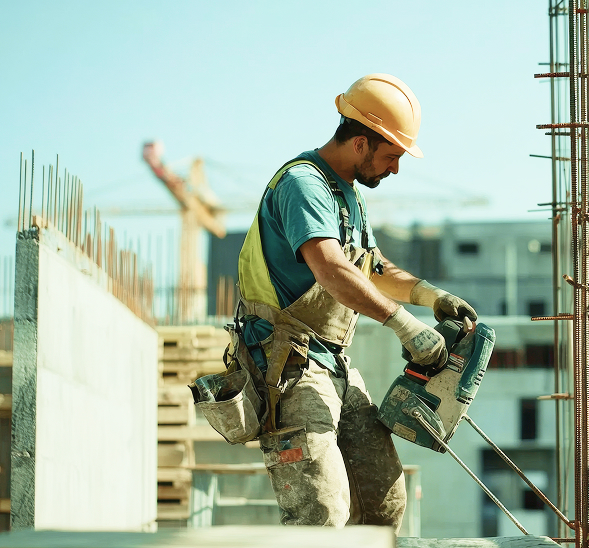
Lone worker safety relies on solutions tailored to their working environment. This involves implementing specific protocols, directly linked to real field conditions and the technical constraints of the sites.
Certain environments, such as sewers, tunnels or areas without network coverage, present specific risks. In these situations, it is essential to provide protocols tailored to lone working and to equip staff with devices capable of operating even in dead zones.
- Deploy protocols tailored to lone working
- Use lone worker alarm devices that function without a network
- Guarantee the transmission of an alert in all circumstances



Safeguard: a Lone Worker Protection solution tailored to the public sector
The Safeguard lone worker alarm device addresses lone working risks, even in the most complex environments such as basements or dead zones. It enables rapid intervention in emergencies, where every minute counts.
The Safeguard lone worker device: precision at the service of safety
The Safeguard lone worker alarm device addresses lone working risks, even in the most complex environments such as basements or dead zones. It enables rapid intervention in emergencies, where every minute counts.
Key benefits of the Safeguard lone worker device
- Ultra-precise 3D positioning
- Effective in complex areas
- Rapid intervention
- Simple to use
- Full autonomy
- Optimised ergonomics
- Ultra-precise 3D positioning: indoors and outdoors, even without GPS
- Effective in complex areas: basements, tunnels, dead zones
- Rapid intervention: reliable transmission for immediate response
- Simple to use: no buttons to activate, automatically ready for use
- Full autonomy: functions without manipulation (active once removed from the charger)
- Optimised ergonomics: lightweight and easy to wear daily
A solution designed for the field
The Safeguard device adapts to the real-world constraints of industrial environments and mobile operations. Its ease of use reduces human error while ensuring continuous protection for lone workers.

How does the Safeguard lone worker alarm device protect lone workers in local authorities?
Automatic alerts
Safeguard sensors automatically detect loss of verticality, falls, and prolonged immobility. In the event of a confirmed accident, the device sends an alert to supervision software, which immediately notifies emergency services or authorised personnel. The alert escalation chain is fully configurable.
Detection is accompanied by precise geolocation, essential for emergency services: every minute counts during an incident. For example, in the case of a stroke, a 15-minute delay can reduce life expectancy by one month.
Manual alerts
Sysnav's lone worker alarm device can be linked to the lone worker's smartphone. If needed, the worker can trigger an SOS alert that will be immediately transmitted to emergency services. The incident's geolocation then allows for rapid intervention at the right location, ensuring a swift response.
What are the specific features of the Safeguard lone worker alarm device for local authorities ?

Precise location of the worker in distress for rapid assistance
Sysnav's Safeguard lone worker alarm device stands out for its ability to geolocate any lone worker, wherever they are. The unique technology developed by Sysnav allows the device's position to be known everywhere. Indeed, even in the absence of GPS, the device is geolocated thanks to an algorithm based on human step movements to trace the user's path.
For example, a maintenance technician working at night in the basement of a large building, who would be almost invisible to classic GPS, could be precisely located in case of distress, at the right place and on the right level. Sysnav's lone worker device inertial technology makes 3D geolocation of the lone worker possible, whether underground, inside a building, or outdoors.

Dead zone coverage in local authorities
In areas with no network coverage, protecting employees is a major challenge because no system can send an alert to a manager, even in the event of automatic detection. It is therefore necessary to take these areas into account to cover them with a complementary communication system or to implement specific measures and protocols.
At Sysnav, we propose to cover your dead zones with LoRaWAN to ensure alerts are sent anywhere on the site, thereby ensuring high-performance protection for your lone workers.
Precise location of the lone worker in distress
Dead zone coverage in local authorities